

SOA OS23: How to Build Scalable Enterprise Systems
Service-oriented architecture transforms how companies build software. Soa os23 gives developers a practical framework for creating systems that scale. You’ll discover what makes soa os23 different from traditional architectures.
What Is SOA OS23?
Soa os23 breaks applications into independent services. Each service runs separately and handles one job. Traditional software puts everything in one big program. Change one part and you risk breaking everything else. Soa os23 works differently. Services connect through standard interfaces. Update one service without touching others.
Core Principles
Four ideas drive soa os23 design:
- Services connect loosely, not tightly.
- Each piece operates on its own.
- Growth happens where you need it.
- Systems talk regardless of technology.
These aren’t just theories. They solve actual problems developers face daily.
How SOA OS23 Works
Soa os23 uses three distinct layers. Understanding each layer shows you how the system operates.
Service Layer
Individual services live here. A payment service processes transactions. A search service finds products. Services own their data. They don’t share databases with other services. This prevents conflicts and data corruption. Each service exposes endpoints. Other services call these endpoints to get work done.
Integration Layer
This middle layer handles communication. Services don’t talk directly to each other. Messages pass through the integration layer. It converts formats when needed. It routes requests to the right destination. When services fail, this layer catches errors. It retries operations or sends alerts.
Governance Layer
Rules and policies live here. The governance layer checks if operations follow company standards. It tracks who accesses what. Security policies get enforced consistently. Performance metrics get collected automatically.
Key Benefits of SOA OS23
Real companies report specific gains from soa os23. These aren’t vague improvements.
Faster Development Cycles
A financial services company cut release time from six weeks to two weeks. They reused existing authentication services instead of rebuilding login systems. Teams work independently on separate services. Your team updates the shopping cart while another team rebuilds search. Bugs stay contained. A broken recommendation service doesn’t crash your checkout process.
Lower Operational Costs
Soa os23 cuts waste. Scale your database service during peak hours. Scale down at night. One retail company reduced server costs by 35%. They ran payment processing on powerful servers. Email notifications ran on cheaper machines. Developers fix problems faster. They examine one service instead of millions of lines of code.
Better System Integration
Your warehouse system runs on old technology. Your website uses modern frameworks. Soa os23 connects them. A logistics company integrated:
- 1980s inventory system.
- Modern mobile apps.
- Partner shipping APIs.
- Customer tracking portals.
Each system kept working as before. Services created the bridges between them.
Increased Flexibility
Markets shift. Customer demands change. Soa os23 adapts. Add a new payment method by creating a service. Remove an outdated shipping option by turning off one service. Test experimental features on small user groups. Roll back instantly if something breaks.
Technical Components
Soa os23 requires specific technical decisions. These choices determine if your system succeeds or struggles.
Service Design
Good services have clear jobs. A user service manages accounts. It doesn’t process orders or send emails. Services must work without remembering previous requests. Stateless design lets you run multiple copies for speed. Version your services. Payment v1 and payment v2 can run simultaneously. Old apps keep working while new apps use updated features.
Communication Methods
Soa os23 supports different communication styles. Pick the right one for each situation. REST works for simple requests. “Get customer data” or “Update address” fits REST perfectly. Message queues handle background work. Order confirmation emails don’t need instant sending. Queue them up. Events broadcast changes. When inventory updates, multiple services get notified automatically.
Security Framework
Every service call gets checked. Soa os23 authenticates requests before processing them. API keys identify applications. OAuth tokens represent users. Both get validated on every request. Encrypt data moving between services. Even on internal networks, encryption prevents snooping. Log everything. Track which services got called, when, and by whom.

Common Applications
Soa os23 handles specific business scenarios particularly well. Here’s where it shines.
Enterprise Integration
Banks run dozens of disconnected systems. Customer data lives in one place. Transaction history lives somewhere else. Soa os23 creates unified views. A customer service representative sees:
- Account balances from the core banking system.
- Recent transactions from the payment processor.
- Support tickets from the help desk.
- Preferences from the CRM database.
One interface pulls from multiple sources. The underlying systems never change.
Digital Transformation
Insurance companies have policy systems from the 1990s. These systems work but look outdated. Soa os23 wraps old systems in modern services. Mobile apps call these services. Customers get smartphone access to legacy data. The old system keeps running. No risky replacement project. Just new interfaces on proven systems.
Partner Ecosystems
Manufacturers work with suppliers, distributors, and retailers. Each partner needs specific data access. Soa os23 exposes controlled services. Suppliers check inventory levels. They can’t see customer information. Distributors track shipments. They can’t modify product catalogs.
Implementation Best Practices
Companies succeed with soa os23 by following specific patterns. Skip these and you’ll hit problems.
Define Clear Objectives
One company wanted “better integration.” Too vague. They refined it to “reduce order processing time from 4 hours to 30 minutes.” Specific goals drive specific solutions. Vague goals create bloated projects. Measure before you start. Know your current performance. Track improvement as you build.
Begin Small
A healthcare company started with appointment scheduling. Just three services: availability, booking, and notifications. They learned service design on a manageable project. Six months later they tackled the harder problem of medical records. Starting big leads to failure. Starting small builds expertise.
Establish Governance
Create naming rules before building your second service. “customer-service” and “CustomerService” look different to computers. Document what each service does. Include code examples. Future developers will thank you. Review services quarterly. Shut down unused ones. Update old ones. Services multiply quickly without oversight.
Monitor Continuously
Set up monitoring on day one. Track response times before users complain about slowness. One e-commerce site noticed their product service slowing down. They fixed it before customers experienced problems. Alerts catch issues at 3 AM. Logs help you understand what happened. Both are mandatory, not optional.
Common Challenges
Soa os23 creates new problems while solving old ones. Expect these issues.
Managing Complexity
Twenty services are manageable. Two hundred services become chaotic. Draw diagrams showing service relationships. Update them when you add services. Outdated diagrams cause confusion. Implement service discovery. Services register themselves automatically. Developers query the registry to find what they need.
Performance Optimization
Each service call crosses the network. Ten services in a chain means ten network hops. Cache aggressively. Store frequent queries in memory. Reduce repeated database calls. Combine services when you find tight coupling. Three services that always work together should probably be one service.
Team Coordination
Different teams own different services. Coordination becomes critical. Define interface contracts clearly. The payment service accepts specific data formats. Document them precisely. Breaking changes require migration plans. Give teams three months’ notice before removing old endpoints.
Conclusion
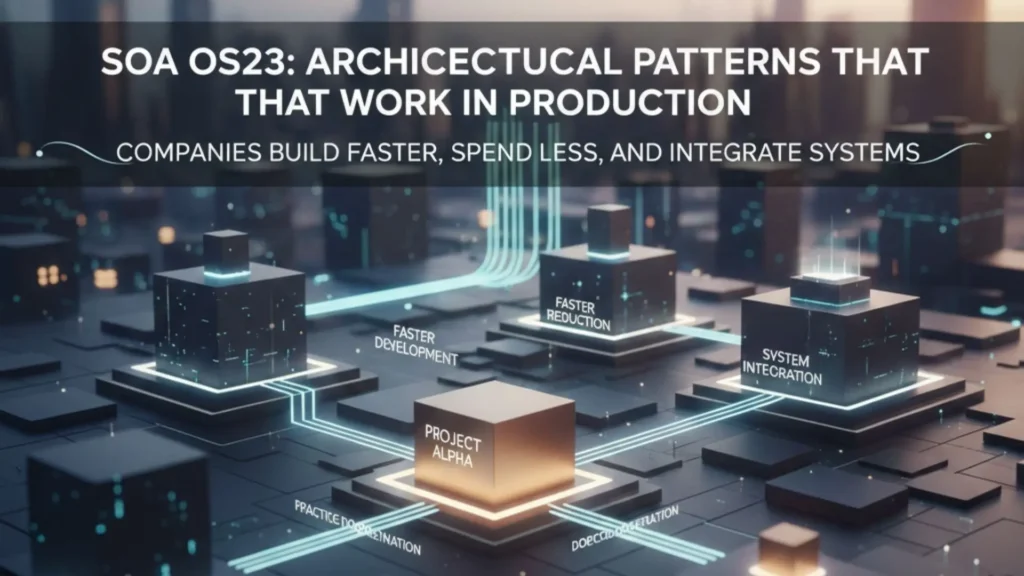
Soa os23 gives you architectural patterns that work in production environments. Companies build faster, spend less, and integrate systems that previously couldn’t communicate. Start with one small project. Build expertise through practice. Document everything you learn. Scale gradually as your team gains confidence. Your first service won’t be perfect, and that’s expected.