Honda S2000: Engine Specs, Suspension & Handling Review
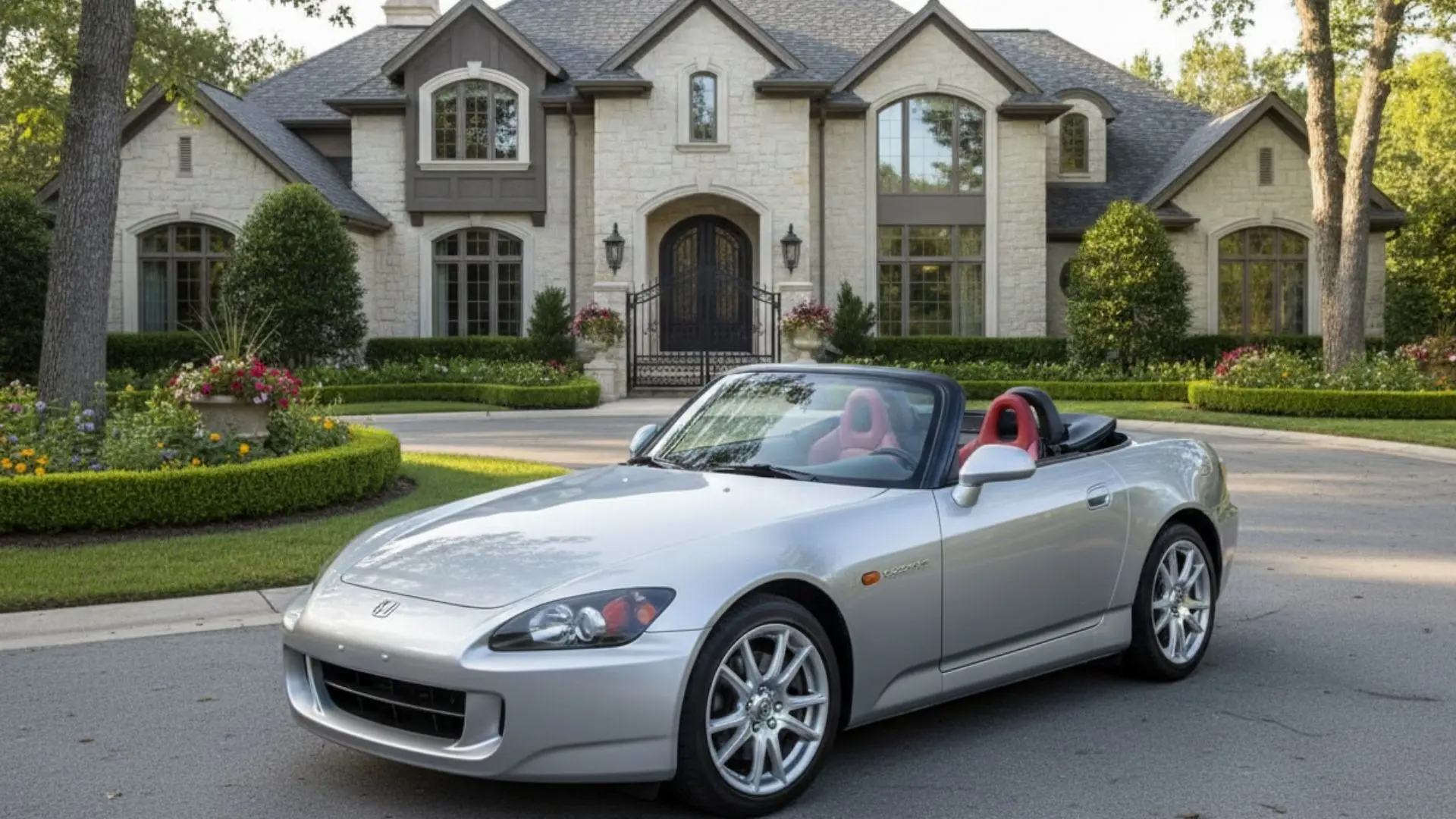
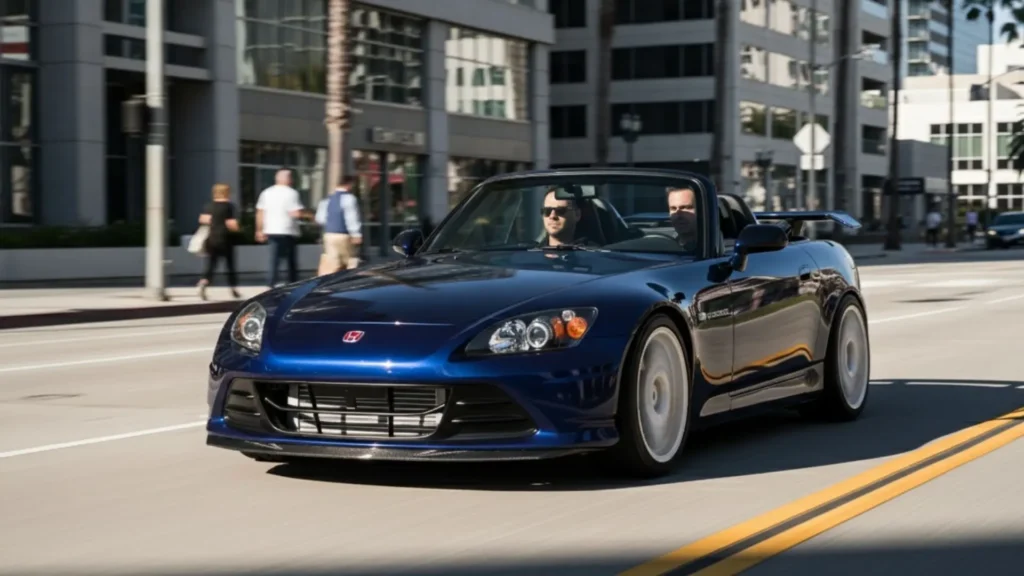
The Honda S2000 is a two-seat convertible sports car. Honda made it from 1999 to 2009. This car celebrated Honda’s 50th birthday. It became famous for its powerful engine and great handling. Many car lovers still want this roadster today. The S2000 offers pure driving fun. It has a manual transmission and rear-wheel drive. This car stands out in the sports car world.
How Honda Created the S2000
Honda started planning the S2000 in 1995. They wanted to make a modern sports car. The company had made similar cars in the 1960s. Those older models were called S600 and S800. Honda wanted to bring back that spirit.
Development Timeline:
- 1995: Honda begins design work
- 1995: First concept shown at Tokyo Motor Show
- April 1999: Car goes on sale in Japan
- Late 1999: Available in United States
- 2004: Updated version released
- 2009: Production stops
- Total made: About 110,000 cars worldwide
The team leader was Shigeru Uehara. He had worked on the Honda NSX supercar before. His experience helped make the S2000 special. The car took four years to develop. Honda tested it at race tracks around the world.
The Amazing Engine
The engine is the best part of the Honda S2000. Honda built two different engines for this car. Both are four-cylinder motors. They spin very fast and make great sounds.
F20C Engine (1999-2003 Models):
- Size: 2.0 liters
- Power: 240 horsepower
- Peak RPM: 8,300
- Max engine speed: 9,000 RPM
- Torque: 153 pound-feet
- Best power per liter ever made at that time
- Uses VTEC technology
- No turbocharger needed
F22C1 Engine (2004-2009 Models):
- Size: 2.2 liters
- Power: 237 horsepower
- Peak RPM: 7,800
- Max engine speed: 8,200 RPM
- Torque: 162 pound-feet
- Better low-end power.
- Still uses VTEC.
- More drivable in daily use.
The F20C engine was special. It made 123.5 horsepower per liter. No other regular production car did better. The engine could spin to 9,000 RPM safely. This high limit made the car feel like a race car. The VTEC system changed how the valves worked. Below 6,000 RPM, it focused on efficiency. Above 6,000 RPM, it delivered maximum power.
Transmission Details
Every Honda S2000 came with a manual transmission. Honda never offered an automatic. This choice kept the car pure and fun.
Gearbox Specs:
- Six forward speeds.
- Smooth shifting action.
- Short throw shifter.
- Aluminum shift knob.
- Metal linkage for precise feel.
- Hydraulic clutch operation.
- Clutch is easy to use daily.
Power Transfer System:
- Rear-wheel drive layout.
- Torsen limited-slip differential comes standard.
- Aluminum driveshaft saves weight.
- 50/50 weight balance front to rear.
- Perfect weight distribution helps handling.
The limited-slip differential was important. It helped both rear wheels grip during turns. Most competitors made this feature optional. Honda included it on every S2000.
Size and Weight Numbers
The Honda S2000 is a small car. Its compact size helps it handle well. Light weight makes it fast.
Outside Measurements:
| Measurement | Size |
| Length | 162.2 inches |
| Width | 68.9 inches |
| Height | 50.6 inches |
| Wheelbase | 94.5 inches |
| Weight | 2,800-2,865 lbs |
Inside Space:
| Measurement | Size |
| Headroom | 35 inches |
| Legroom | 43.3 inches |
| Trunk | 5 cubic feet |
Fuel System:
- Gas tank: 13.2 gallons
- Needs premium fuel
Honda used aluminum for many parts. The hood is aluminum. The trunk lid is aluminum. This saved about 100 pounds compared to steel. Less weight means better acceleration and handling.
Suspension and Steering Setup
The Honda S2000 has a race-car suspension. Every corner uses a double-wishbone design. This type costs more to build. It gives better control.
Front Suspension Parts:
- Independent double-wishbone arms.
- Coil spring at each wheel.
- Gas-charged shock absorbers.
- Anti-roll bar for flat cornering.
- Precise steering response.
- 14:1 steering ratio.
Rear Suspension Parts:
- Independent double-wishbone arms.
- Coil springs.
- Matched shock absorbers.
- Larger anti-roll bar than front.
- Aluminum mounting points.
2004 Update Changes:
- Softer spring rates.
- Different shock tuning.
- Changed suspension angles.
- Less tail-happy behavior.
- Electric power steering added in 2006.
The double-wishbone setup is expensive. Most cars use simpler designs. Honda chose quality over cost. This decision paid off with amazing handling.
Brake System
Good brakes are important for a sports car. The Honda S2000 has strong brakes at all four wheels.
Brake Components:
- Front discs: 11.8 inches across
- Rear discs: 11.1 inches across
- Ventilated rotors cool quickly.
- Anti-lock brakes standard.
- Single-piston calipers.
- Power-assisted for easy pedal feel.
- Hand brake works on rear wheels.
The large disc brakes work well. They stop the car quickly. The vented design prevents fade. You can brake hard lap after lap. The ABS system prevents wheel lockup.
How Fast It Goes
The Honda S2000 is quick. It competes with more expensive cars. The light weight helps acceleration.
Speed Numbers:
- 0 to 60 mph: 5.4 seconds
- Quarter mile: 14.2 seconds
- Top speed: 150 mph
- Stopping from 60 mph: 110 feet
- Cornering grip: 0.95 g-force
Fuel Mileage:
- City driving: 18-20 mpg
- Highway driving: 24-26 mpg
- Mixed driving: 20-22 mpg
These numbers impress many people. A 2.0-liter four-cylinder should not go this fast. Honda’s engineering made it possible. The high-revving engine needs to be pushed hard. Shift at 8,500 RPM for best acceleration.
Special Features
The Honda S2000 has many unique touches. These details make it different from other roadsters.
Body Structure:
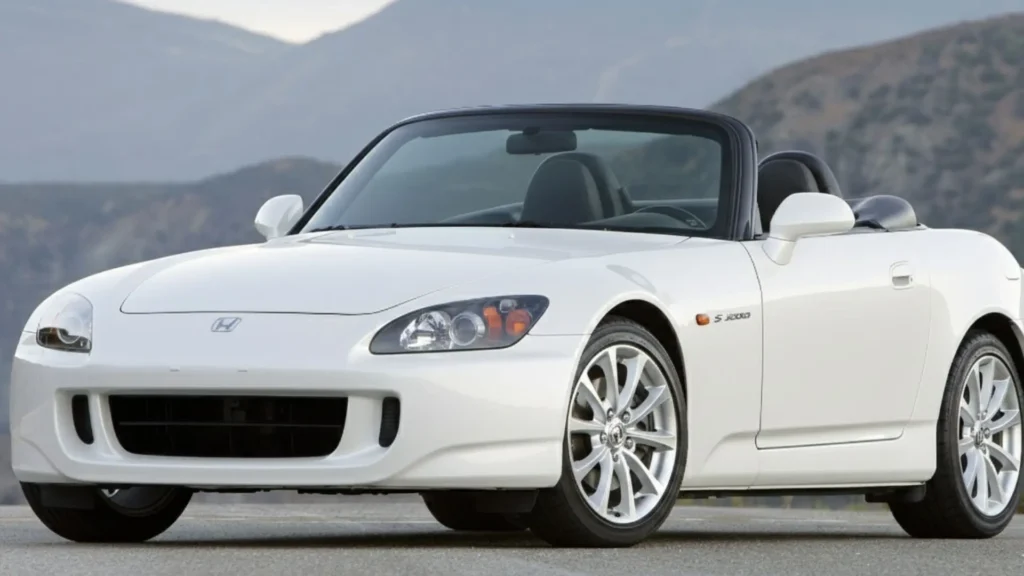
- X-bone frame design.
- Very stiff chassis.
- Aluminum hood and trunk.
- Strong side-impact beams.
- Roll bars behind seats.
- Designed for safety and rigidity.
Dashboard and Gauges:
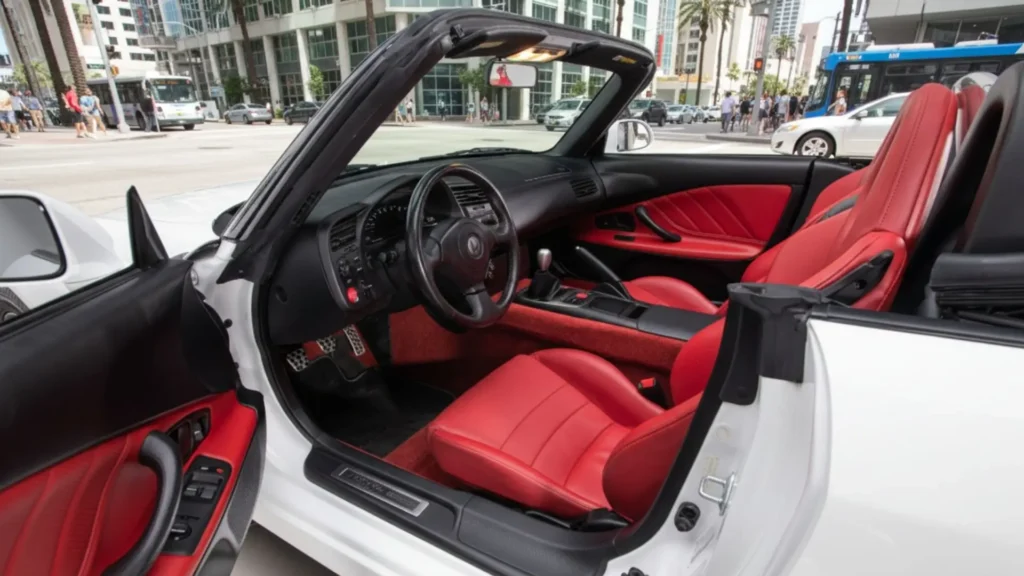
- Digital tachometer in center.
- Speedometer on right side.
- Tach lights up as RPM climbs.
- Cool startup animation.
- Simple, driver-focused layout.
- Three-spoke steering wheel.
Seat Design:
- Sport bucket seats.
- Built-in headrests.
- Leather covering.
- Good side support.
- Comfortable for long drives.
- Low seating position.
Technology Inside:
- Electronic throttle control.
- Individual throttle bodies for each cylinder.
- Oil cooler for track driving.
- Brake cooling ducts in bumper.
- Knock sensor protects engine.
- Smart fuel injection system.
Changes Through the Years
Honda made the S2000 for ten years. They improved it over time. There are two main versions.
AP1 Version (1999-2003):
- 2.0-liter engine
- 9,000 RPM redline
- Original suspension
- Hydraulic steering
- 16-inch wheels
- More aggressive handling
- Lighter feel
- Preferred by driving purists
AP2 Version (2004-2009):
- 2.2-liter engine
- 8,200 RPM redline
- Better low-end torque
- Updated suspension
- 17-inch wheels from 2006
- Electric steering from 2006
- Easier to drive fast
- More stable in corners
Special Club Racer (CR) Model:
- Made in 2008-2009
- 90 pounds lighter
- No air conditioning
- No radio
- Stiffer suspension
- Race-ready from factory
- White or black paint only
- Most valuable model today
The AP1 feels more raw. It demands skill from the driver. The AP2 is more forgiving. New drivers prefer the AP2. Experienced drivers often choose AP1.
What Makes It Different
The Honda S2000 stands apart from rivals. Several things make it unique.
Compared to Mazda Miata:
- Much more powerful engine.
- Higher redline by 2,000 RPM.
- Stiffer suspension.
- Faster acceleration.
- Better performance parts available.
- Cost more when new.
Comparison with Porsche Boxster:
- Lower purchase price.
- Cheaper to maintain.
- More reliable long-term.
- Higher revving engine.
- Manual gearbox only.
- Simpler design
- Better power-to-weight ratio.
Compared to BMW Z4:
- More focused on driving.
- Better balanced chassis.
- Lower operating costs.
- Stronger transmission feel.
- Less electronic assistance.
- More direct feedback.
- Simpler to work on.
Honda S2000 Strengths:
- Highest power per liter when new.
- Most reliable performance roadster.
- Perfect 50/50 weight split.
- Race-car suspension design.
- Very stiff body structure.
- VTEC gives two personalities.
- Lightweight body panels.
- Limited-slip diff included.
- No turbo maintenance.
- Timing chain lasts forever.
- Simple to modify.
- Strong aftermarket support.
Wheels and Tires
Wheel sizes changed during production. Later models got wider tires.
Early Models (1999-2005):
- Front: 16-inch wheels, 205 width tires
- Rear: 16-inch wheels, 225 width tires
- Aluminum construction
- Lightweight design
- Good for daily driving
Later Models (2006-2009):
- Front: 17-inch wheels, 215 width tires
- Rear: 17-inch wheels, 245 width tires
- Better grip
- Improved stability
- New wheel design
- Wider rear track
CR Model Wheels:
- 17-inch diameter
- Ultra-light construction
- Special finish
- Performance tire compound
Larger tires helped handling. The wider rear tires reduced oversteer. Many owners upgrade to staggered setups. Good tires are crucial for performance.
Ownership Experience
The Honda S2000 is reliable. It costs less to own than other sports cars.
Regular Maintenance:
- Oil changes: Every 3,000-5,000 miles
- Valve check: Every 25,000 miles
- Transmission oil: Every 30,000 miles
- Differential oil: Every 30,000 miles
- Coolant change: Every 60,000 miles
- Timing chain: Rarely needs work
Value and Collectibility
The Honda S2000 is worth more now. Good examples are expensive. Prices keep rising.
Market Trends:
- Clean cars cost $25,000-$40,000
- CR models reach $50,000-$70,000
- Low mileage cars very valuable
- Original condition preferred
- Service records matter
- AP1 models gaining value
- AP2 easier to live with
- Unmodified cars worth most
Buy the best example you can afford. Avoid heavily modified cars. Check for accident history. Original paint is preferred. Keep all service records.
Conclusion
The Honda S2000 remains a special sports car. It offers pure driving joy with excellent reliability. This roadster delivers 240+ horsepower through a screaming 9,000 RPM engine. Perfect 50/50 balance and precise steering make every drive exciting. Honda built only 110,000 examples worldwide. Values continue climbing as collectors recognize its significance. Whether you seek weekend thrills or a future classic, the S2000 delivers an unmatched experience that modern cars cannot replicate.