Crew Disquantified Org: Understand Alternative Digital Community
The internet brought people together. Then something broke. Platforms started counting everything. Likes became currency. Followers determined worth. Crew disquantified org rejects this system. It builds communities without scorekeeping. This guide explains how it works.
Understanding Disquantified Digital Spaces
Disquantified means no public numbers. You post without seeing like counts. Follower numbers don’t exist. Content lives on merit, not metrics.
The Research Behind Metrics and Wellbeing
Doctors studied social media users. They found damage from constant counting. Instagram ran tests in 2021. They hid likes from 202 volunteers. After four weeks, anxiety dropped. People posted more honestly. Self-comparison decreased by half. Oxford researchers tracked 5,000 users in 2022. Platforms without visible metrics changed behavior. Users felt better about themselves. Sleep improved. Phone addiction lessened.
What Defines a Disquantified Community
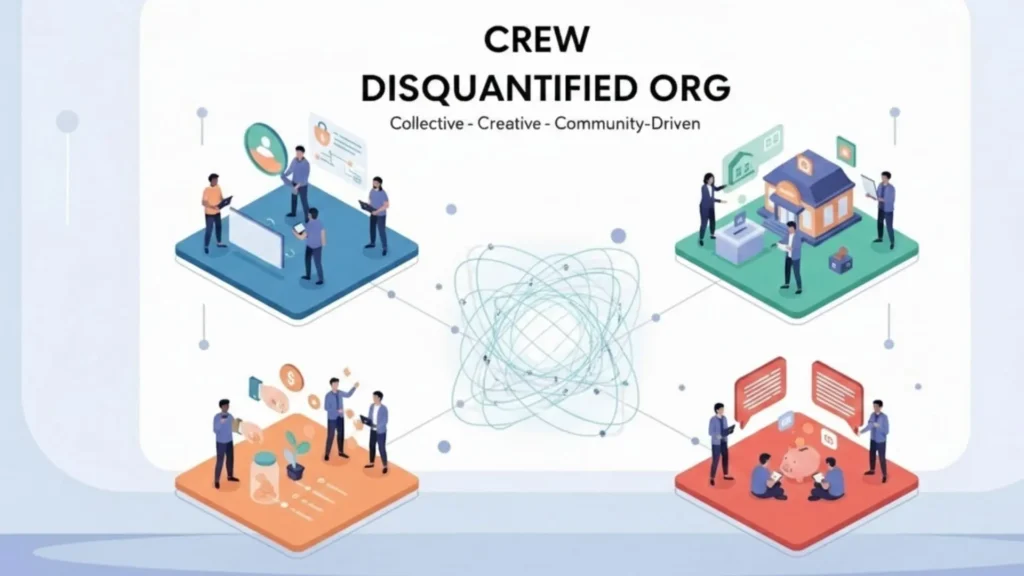
These groups share specific traits. No like buttons appear anywhere. Feeds show posts in time order. Algorithms don’t pick what you see. Members vote on rules together. Budgets stay public and clear.
The Evolution of Online Community Organization
Communities existed before Facebook. They worked better in some ways.
Early Internet Communities
Forums ran the early web. Chat rooms connected strangers. Bulletin boards hosted discussions. Nobody tracked engagement numbers. Quality mattered more than popularity. People helped each other freely. Moderators came from the community.
The Rise of Metrics-Driven Platforms
Facebook added the Like button in 2009. Everything changed after that. Twitter showed follower counts publicly. Instagram built itself around hearts and comments. YouTube ranked videos by views. TikTok measures seconds watched. Pew Research checked user habits in 2020. 67% of people check their stats daily. 42% feel bad when posts flop. The numbers create anxiety loops.
Modern Alternative Approaches
Some platforms now hide metrics. Instagram tested this in seven countries. BeReal shows no like counts. Smaller networks skip metrics entirely. These experiments prove demand exists. Users want escape from scorekeeping.
Core Principles of Alternative Community Models
Different values create different spaces.
Privacy and Data Protection
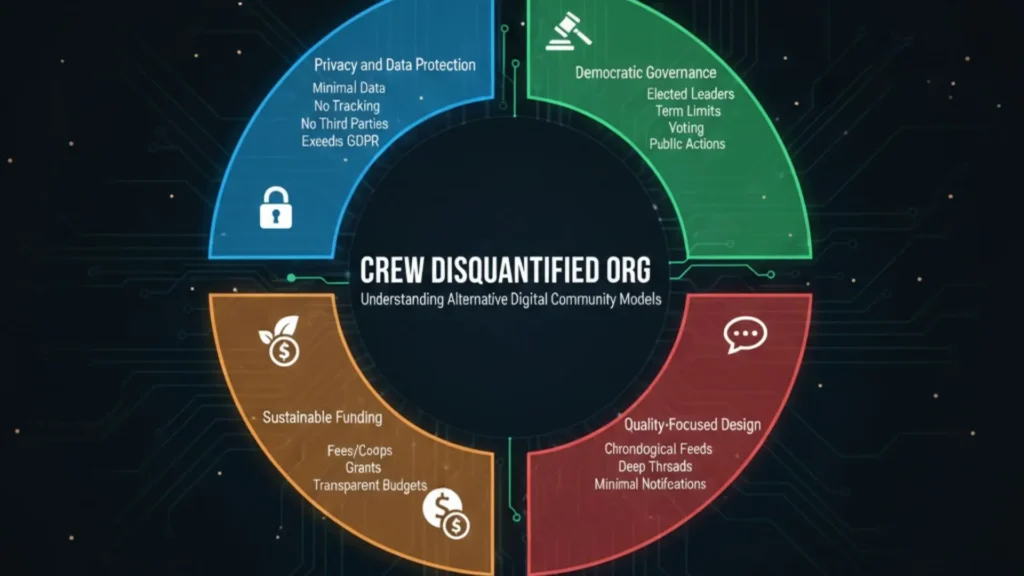
Big platforms sell your information. They track everything you do. Ads follow you across websites. Alternative communities work differently. They collect minimal data. No tracking cookies exist. Third parties get nothing. GDPR set rules in Europe in 2018. Good communities exceed those standards.
Democratic Governance Structures
Members run these communities together. Leaders get elected, not appointed. Terms limits prevent power hoarding. Voting happens on major decisions. Rules change through member proposals. Every action gets documented publicly. Disputes follow clear processes. This beats corporate control completely.
Sustainable Funding Models
No ads means different money sources. Members donate what they can. Some communities charge small fees. Cooperatives share ownership costs. Grants support specific projects. All spending stays transparent. Budgets get published monthly. Communities approve big expenses together.
Quality-Focused Interaction Design
Design shapes how people behave. These platforms build differently. Posts allow longer text. Conversations thread deeply. Warnings flag sensitive content. Accessibility comes standard, not optional. Notifications stay minimal and useful. Nothing pushes compulsive checking.
Documented Benefits of Metric-Free Environments
Real studies show real improvements.
Mental Health Improvements
Psychologists measured the differences. American Psychological Association published findings in 2023. They compared platform types directly. Users without visible metrics did better. Anxiety scores dropped significantly. Sleep quality improved measurably. Social comparison behaviors decreased. Self-esteem rose across all ages. The benefits lasted over time.
Enhanced Community Connection
Carnegie Mellon studied conversations in 2022. They analyzed thousands of discussions. Metric-free communities showed clear patterns. Conversations ran longer and deeper. People responded to each other more. Members stuck around for years. Emotional support happened naturally. Belonging felt stronger and real. Numbers didn’t drive the relationships.
Increased Creative Expression
Artists work differently without metrics. A 2023 survey asked 1,500 creators. Those in metric-free spaces reported changes. They experimented without fear. Trends didn’t control their choices. Satisfaction with work increased. Feedback became more constructive. Burnout happened less often. Pressure lifted when numbers disappeared.
Practical Implementation Approaches
Starting your own community takes planning.
Selecting Appropriate Platforms
Different tools fit different needs. Discourse runs traditional forums well. You control what metrics show. Mastodon offers decentralized networking. Each server sets its own rules. Matrix provides encrypted chat. You host it yourself completely. Mighty Networks hides engagement stats. Pick based on your skills.
Establishing Community Guidelines
Clear rules prevent future problems. Write down expected behaviors. Explain how content sharing works. Define privacy protection standards. Create dispute resolution steps. Make accessibility a requirement. Document decision-making methods. Let members suggest changes. Update guidelines as needed.
Building Moderation Systems
Good moderation keeps communities healthy. Use multiple moderators always. Rotate duties to prevent burnout. Make moderation logs public. Create clear escalation paths. Train moderators properly. Let the community give feedback. Replace moderators through voting. Never let one person control everything.
Ensuring Financial Sustainability
Money matters stay transparent. Publish budgets every month. Show exactly where funds go. Let members vote on spending. Keep reserves for emergencies. Try different income streams. Report financial health regularly. Adjust plans based on reality.
Current Challenges and Limitations
Problems exist in this model.
Scale and Growth Management
Growing too fast kills culture. Intimacy disappears with size. Solutions help but have costs. Limit total member numbers. Create application processes. Build tiered access levels. Onboard newcomers slowly. Each choice trades accessibility for cohesion.
Technical Expertise Requirements
Self-hosting needs real skills. Not everyone knows servers. This blocks some communities. Shared technical support helps. Simpler tools lower barriers. Documentation makes learning possible.
Competition with Mainstream Platforms
Big platforms have massive advantages. Billions of users already exist there. Switching takes real effort. Network effects pull people back. Marketing budgets dwarf alternatives. Growth happens slowly through word-of-mouth. Value must exceed convenience significantly.
Conclusion
Communities without metrics offer real alternatives to mainstream platforms. Studies prove benefits for mental health, relationships, and creativity. Building one requires choosing platforms carefully, writing clear rules, training moderators, and managing money transparently. Growth and technical skills present real challenges. Yet user dissatisfaction with metric-driven spaces keeps growing. Success comes from staying true to core values while adapting to member needs. The future belongs to communities that put people before numbers.