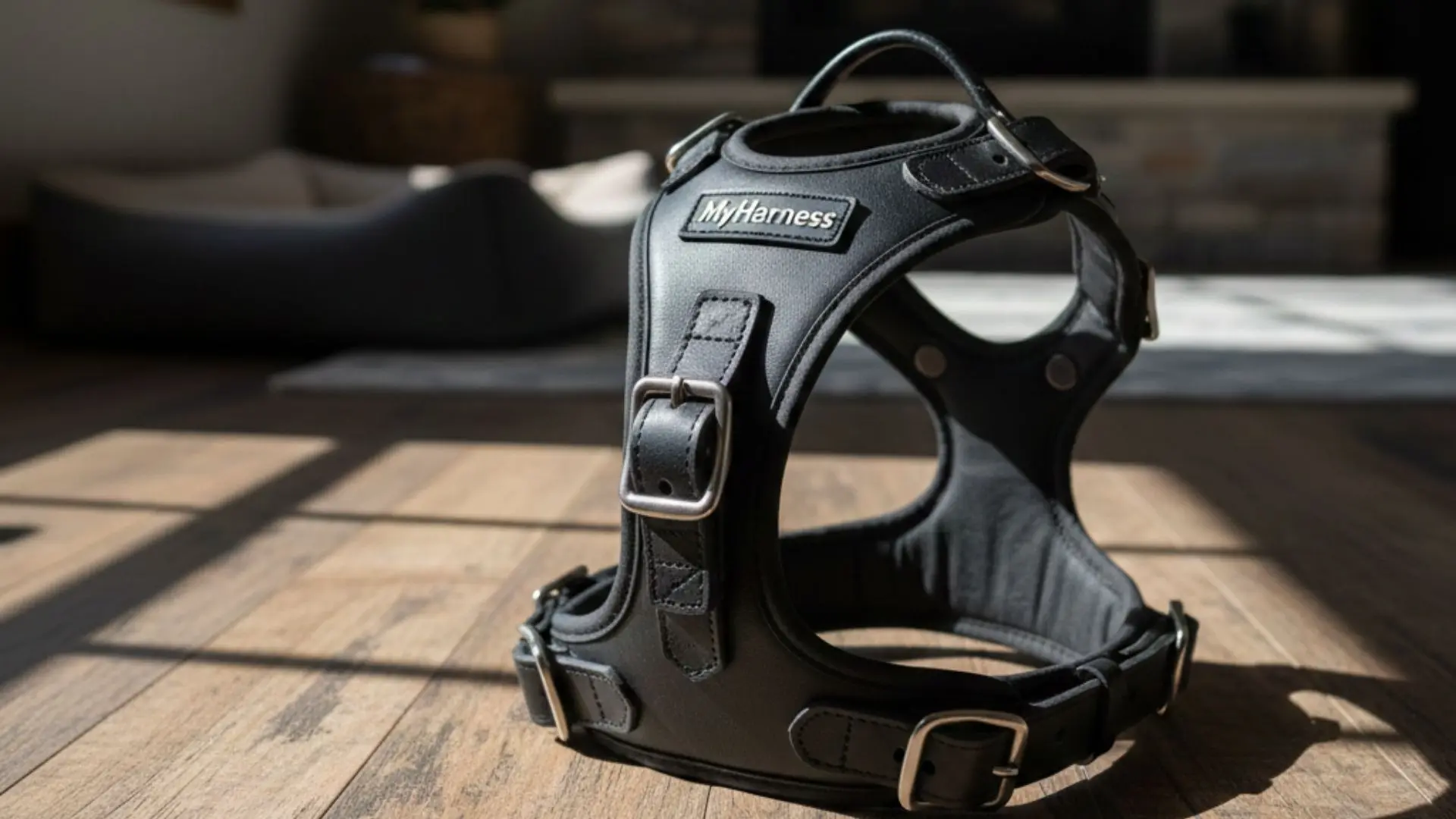
MyHarness: Easy Tips for Choosing Safe and Durable Harnesses
Picking the right harness is hard. Stores sell hundreds of different kinds. You might want one for your job, your dog, or hiking trips. This guide shows you how to find the best myharness.
What Is MyHarness
Myharness means any type of harness product. People use harnesses to stay safe. Workers wear them on tall buildings. Dog owners use them for walks. Rock climbers need them on mountains. A good myharness does more than just hold something in place. It spreads weight evenly across the body. This stops injuries from happening. Today’s harnesses use strong materials that last for years. They fit different body sizes. They work in hot and cold weather.
Why myharness matters:
- Keeps workers safe from falls at job sites.
- Stops dogs from pulling during walks.
- Helps climbers stay secure on rocks.
- Protects cargo during transport.
- Makes activities safer for everyone.
- Fits bodies of all shapes and sizes.
- Works in rain, snow, and sunshine.
- Lasts for many years with care.
Different Types of MyHarness
You can find myharness products for almost any job. Each type serves a different purpose. Some are made for work. Others are built for pets. Some help with sports and fun activities. Work harnesses protect people from dangerous falls. Pet harnesses keep animals under control. Sport harnesses help with climbing and zip-lining. Medical harnesses help move patients safely. Each type has special features that make it work better for its job.
Main myharness types:
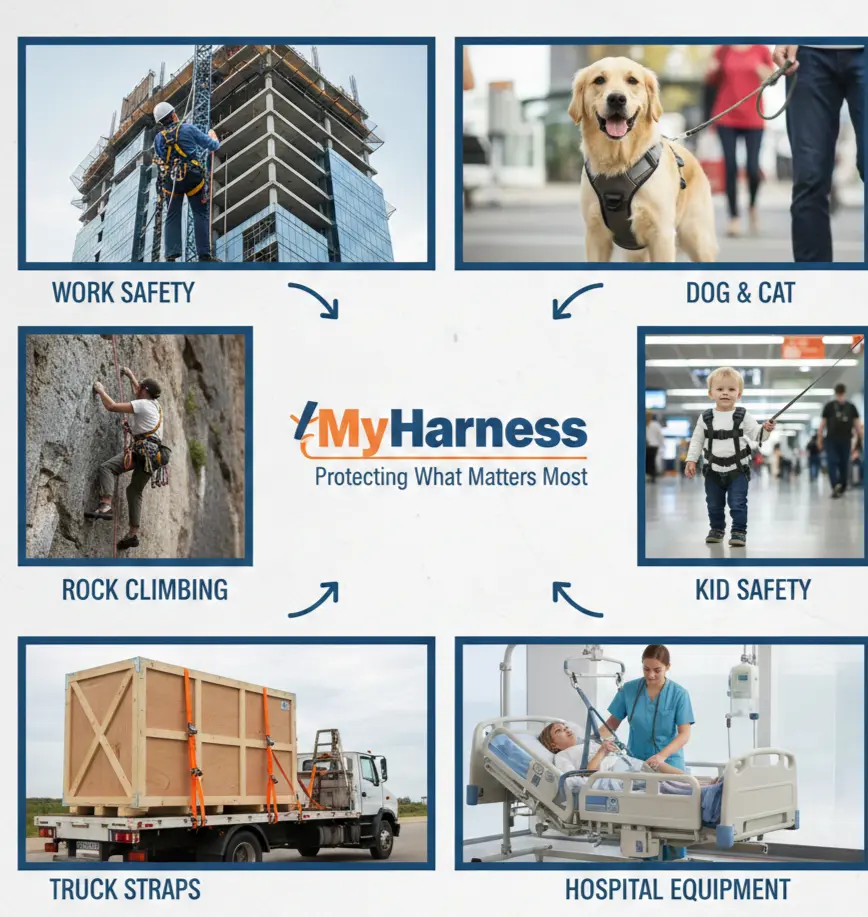
- Work safety models: Stop falls on construction sites and tall buildings.
- Dog and cat versions: Help control pets on walks and during training.
- Rock climbing gear: Keep climbers attached to ropes and walls.
- Kid safety harnesses: Protect toddlers in busy places like airports.
- Truck straps: Hold cargo tight during shipping.
- Hospital equipment: Help nurses move patients without back pain.
- Horse gear: Let horses pull carts and wagons.
- Therapy tools: Support people learning to walk again.
Best Features in MyHarness Products
Good myharness products have certain things in common. These features make them work better. They also make them safer to use. Knowing what to look for helps you buy the right one. The best harnesses fit your body well. They have padding where it touches your skin. The straps adjust to your size. The buckles lock tight. You can take them off fast if needed. They use strong materials that won’t break.
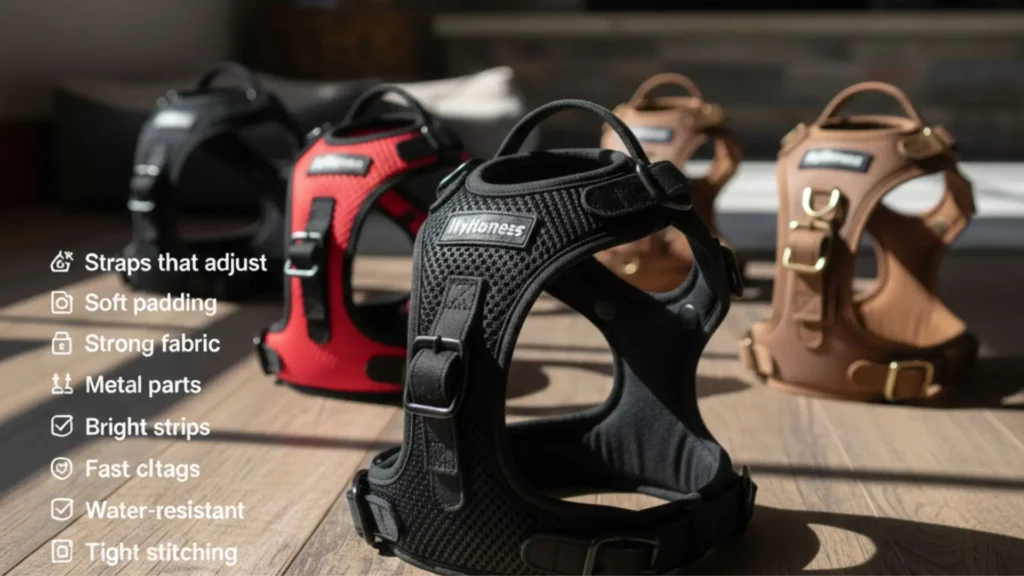
What makes a great myharness:
- Straps that adjust to fit your exact size.
- Soft padding on shoulders and legs.
- Strong fabric that holds heavyweight.
- Metal parts that won’t rust or break.
- Bright strips that glow in the dark.
- Mesh areas that let air flow through.
- Clips that open fast in emergencies.
- Parts that don’t corrode in water.
- Tags that show safety test results.
- Stitching that stays tight over time.
How to Pick Your MyHarness
Buying the right myharness takes time. Figure out what you want it for first. Where will you use it? How many times per week? Write down why you want a harness. Do you need it daily or just sometimes? Is it for your job or fun stuff? How much weight goes on it? Can you throw it in the wash? Does color matter? Ask yourself these things before shopping.
Steps to find your match:
- Write down exactly what you need it for.
- Measure your chest, waist, and legs.
- Look for padding in all the right spots.
- Find ones with safety test labels.
- Read what other buyers say about it.
- Compare prices at different stores.
- Try it on before buying if you can.
- Check how long the company says it lasts.
- Make sure it’s easy to put on alone.
- See if extra clips and straps will fit it.
MyHarness Safety Rules
Wear your myharness the right way, or it won’t protect you. The fanciest harness is useless if you put it on wrong. Check it every time before use. Know what it can and can’t do. Look at your harness before putting it on. Find any rips, tears, or worn spots. The straps shouldn’t be twisted. Make it fit snug but not super tight. Lock every buckle. Test each clip. Don’t use a damaged harness. Toss it when it gets old.
Stay safe with these tips:
- Look for damage before every single use.
- Put it on the way the manual shows.
- Tighten all straps until they feel secure.
- Clean it after use and store it properly.
- Learn how to use it before the first time.
- Never load it with more weight than rated.
- Check that clips are fully locked.
- Replace it when the maker says to.
- Write down when you inspect it.
- Know what to do if something breaks.
Taking Care of Your MyHarness
Your myharness lasts longer when you take care of it. Clean it regularly. Store it correctly. Look for problems. Do this and save money. Dirt and sweat wreck the fabric. Wash your harness with mild soap and water. Let it air dry, not in direct sun. Keep it somewhere cool and dry. Don’t leave it in your truck or garage near chemicals. Don’t cut it or mess with any parts.
Care tips that work:
- Wash with gentle soap and cool water.
- Hang to dry away from heaters and sun.
- Put away in a cool spot with no moisture.
- Look at every part after you use it.
- Oil moving parts if the manual says to.
- Don’t add holes or cut any straps.
- Get pros to check work harnesses yearly.
- Write down when you clean and check it.
- Swap out broken pieces right away.
- Do what the maker’s guide tells you.
Conclusion
The right myharness makes life safer and easier. You now know what to look for. You understand the different types. Also, pick one that fits your needs. Take time to shop around. Read reviews from real users. Don’t go cheap on safety gear. A quality myharness protects what matters most. Whether it’s for your job, your pet, or your hobby, get one that’s right for you. Check it often. Take care of it. Replace it when needed. Your safety is worth it.