Övrrsätt: Understand Modern Translation Services & Their Benefits
Övrrsätt is the Swedish word for “translate.” It helps people convert text from one language to another. Translation breaks language barriers worldwide.
What Is Övrrsätt?
Translation connects people who speak different languages. It helps businesses reach customers globally. Students access educational materials in their language.
Övrrsätt refers to Swedish translation services. The concept applies to all language pairs. Modern translation uses human experts and technology.
How Translation Works
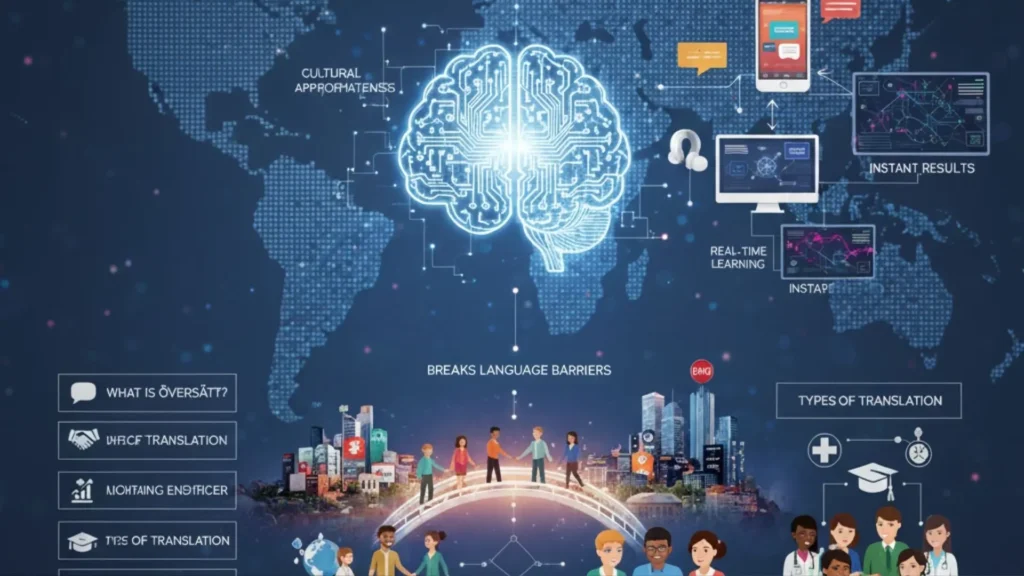
Translation is more than word replacement. It transfers complete meaning between languages. Good translation keeps tone and cultural meaning. Human translators read the original text. They understand the message. Then they recreate it in another language. Machine translation uses computer programs. These tools analyze millions of translated texts. They predict translations based on data.
Benefits of Translation Services
Breaks Language Barriers
Over 66 million US residents speak non-English at home. 26 million have Limited English Proficiency. Translation helps them access information. Language shapes how people think. Övrrsätt exchanges ideas across cultures. It creates understanding between communities.
Connects People Globally
Language bridges different cultures. People share knowledge freely. Social media includes real-time translation. Apps like WhatsApp and WeChat offer translation. These features create instant connections. Communication happens across languages easily.
Helps Businesses Grow
Companies enter new markets with övrrsätt. Product descriptions reach local customers. Marketing messages connect with audiences. Translation removes business language barriers. Companies communicate with international partners. Customer service becomes accessible.
Supports Education
Students learn in their native languages. Research papers share findings globally. Universities run international programs. Many courses exist only in English. Translation makes education available everywhere. Knowledge becomes accessible to all.
Improves Healthcare
Language barriers cause dangerous medical errors. Clear communication ensures accurate treatment. Translation saves lives in healthcare. Medical records transfer correctly. Prescription information stays accurate. Clinical documents maintain precise meaning.
Types of Translation Services
Human Translation
Professional translators offer highest accuracy. They are native speakers. Expertise ensures quality results. Translators understand cultural nuances. They recognize idioms correctly. Regional differences get proper attention. The process includes multiple reviews. One person translates. Another edits. A proofreader catches errors.
Machine Translation
Automated tools provide instant results. They work for basic needs. Understanding websites becomes easy. Google Translate supports 249 languages. It serves 500 million users. 100 billion words translate daily. Machines work best for simple texts. They handle casual conversations. Quick emails get translated fast. Machines make context mistakes. Cultural meanings get lost. Important documents need human review.
Combined Approach
Many services blend both methods. Machines translate first. Human experts then edit.This delivers faster results. Quality stays higher than machines alone. The process balances speed with accuracy.
Key Features of Quality Translation
Accuracy
Accuracy means clear meaning transfer. Small errors cause big problems. Legal documents need absolute precision. Terms stay consistent throughout. Technical words translate correctly. Original message keeps full meaning.
Fluency
Fluency measures proper grammar use. Text should read naturally. Native speakers find it smooth. Good övrrsätt never sounds awkward. Sentences flow properly. Grammar follows local standards.
Cultural Appropriateness
Translation respects local customs. What works somewhere may offend elsewhere. Colors and symbols differ globally. Humor needs careful adaptation. Direct translation often fails. Cultural context shapes word choices.
Consistency
Brand terms stay identical throughout. Technical words maintain uniform translation. Style remains matching across projects. Translation memory stores previous work. This guarantees consistency. Repeated phrases use identical wording.
How Translation Helps Different Sectors
Business Communication
International trade depends on accurate övrrsätt. Contracts need precise language. Product descriptions appeal locally. Marketing needs cultural adaptation. Sales reach foreign clients. Business letters maintain professional tone.
Healthcare Services
Patient safety needs clear communication. Medical records transfer accurately. Drug information prevents mistakes. Telemedicine works across languages. Doctors understand patient histories. Treatment plans get explained clearly.
Legal Documentation
Court documents need certified translation. One wrong term changes everything. Patents require exact language. Immigration papers must be accurate. Certificates translate correctly. Government forms meet standards.
Education Access
Research papers spread knowledge globally. Students learn from international resources. Materials become available everywhere. Online platforms need translation support. Course content reaches diverse learners. Academic work crosses borders.
Tourism Industry
Language barriers hinder travelers. Translation apps help navigation. Hotel information becomes understandable. Restaurant menus translate instantly. Local attractions share stories. Travelers experience cultures fully.
Technology in Modern Translation

Artificial Intelligence
AI uses smart algorithms for translation. Neural networks consider context. Machine learning improves quality over time. Systems learn from vast data. Patterns guide better translations. AI handles large volumes quickly.
Translation Memory Systems
These databases store previous translations. Similar text gets instant suggestions. This ensures consistency. Translation memory reduces repeat work. Content translates faster. Quality improves through reuse.
Computer-Assisted Translation Tools
CAT tools help translators work efficiently. They provide suggestions. They manage terminology. Translators stay in control. Technology assists without replacing judgment. The combination produces excellent results.
Quality Assurance Methods
Multi-Stage Review
Translation includes multiple checks. After initial translation, editors review. A final check ensures perfection. Multiple reviewers catch different errors. Fresh eyes spot mistakes. High standards get maintained.
Error Classification
Errors get categorized into seven types. These include Terminology, Accuracy, and Fluency. Each receives severity rating. Critical errors affect understanding seriously. Major errors reduce clarity. Minor errors have minimal impact.
Quality Metrics
Metrics include Accuracy, Fluency, and Style. These provide objective assessment. Grammar must be correct. Cultural suitability gets verified. Consistency maintains throughout text. Standards ensure reliable results.
Choosing Translation Services
Verify Qualifications
Translators should be native speakers. They should live where language is spoken. This ensures current knowledge. Check professional certifications. Industry expertise matters. Experience proves reliability.
Assess Quality Processes
ISO-certified companies use skilled professionals. Standardized procedures minimize errors. Ask about review stages. Understand quality control methods. Confirm correction handling. Clear processes ensure results.
Consider Security
ISO certifications protect client data. Confidentiality matters for sensitive documents. Providers should sign agreements. Secure systems protect information. Data gets deleted after completion. Privacy stays protected.
Check Response Time
Understand realistic schedules. Complex projects take time. Rush services may reduce quality. Clear communication prevents delays. Managers coordinate workflow. Timeline clarity helps planning.
Common Translation Mistakes
Word-for-Word Translation
Languages structure differently. Direct translation fails. Meaning gets lost. Professional övrrsätt adapts meaning. Context determines choices. Natural flow matters most.
Ignoring Dialects
Spanish varies between countries. Portuguese differs regionally. Chinese has multiple versions. Specify target regions clearly. Wrong dialects confuse audiences. Regional preferences affect acceptance.
Missing Context
Translation without background fails. Translators need purpose understanding. Audience knowledge improves results. Style guides provide direction. Reference materials ensure consistency. Clear communication prevents problems.
Overlooking Formatting
Technical documents need proper layout. Charts need attention. Images may contain text. File formats must stay intact. Design needs careful handling. Visual presentation affects understanding.
Real-Time Translation
Real-time devices use AI instantly. Conversations happen seamlessly. Different languages connect easily. Earbuds translate during conversations. Travelers use these daily. Business meetings include international participants. Video translation opens content globally. Live interpretation supports events. Communication happens without delays.
Conclusion
Translation bridges communication gaps worldwide. Övrrsätt helps businesses expand and individuals connect across cultures. Quality translation preserves meaning and ensures accuracy. Both human expertise and technology play vital roles. Choosing reliable services requires checking qualifications and understanding quality processes carefully.