How Many Volts is a Car Battery?
Your car won’t start without a working battery. But do you know how many volts is a car battery? Most people don’t check their battery until problems happen. This guide helps you understand battery voltage better.
A standard car battery has 12.6 volts when fully charged. This number changes based on different conditions. The battery powers your starter motor. It also runs lights and electronics. Knowing the right voltage helps you spot problems early.
What is the Standard Car Battery Voltage?
Most cars use 12-volt batteries. A fully charged battery shows 12.6 to 12.8 volts. This reading happens when the engine is off. The battery needs rest time before testing. Wait at least two hours after driving.
Your battery voltage drops as it discharges. Here are the common voltage levels:
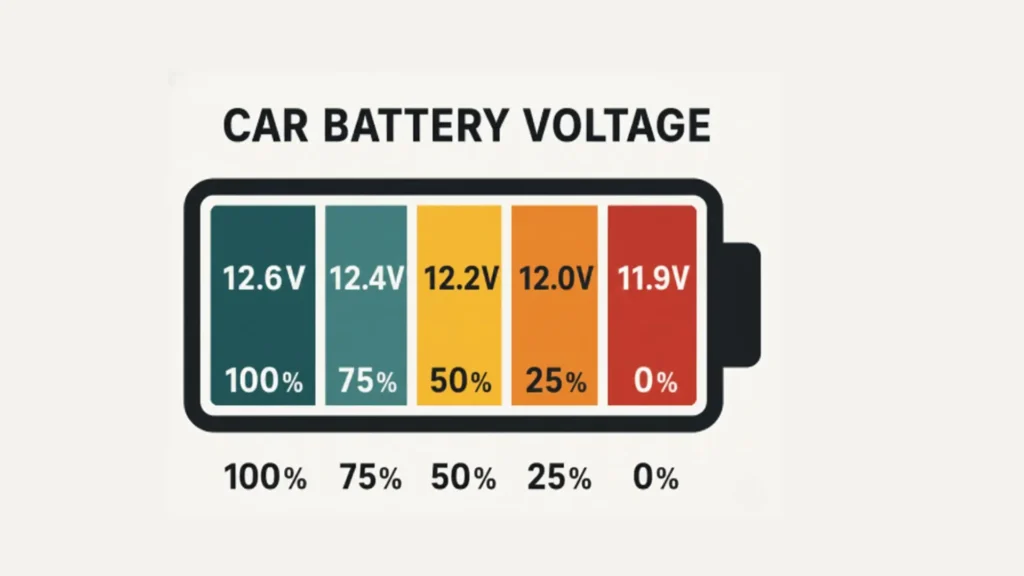
- Full Charge: 12.6 to 12.8 volts
- 75% Charge: 12.4 volts
- 50% Charge: 12.2 volts
- 25% Charge: 12.0 volts
- Dead Battery: Below 11.9 volts
- Engine Running: 13.7 to 14.7 volts
Why Cars Use 12-Volt Batteries
Car batteries contain six cells inside. Each cell makes 2.1 volts of power. Six cells multiply together to give 12.6 volts total. That’s why we call them 12-volt batteries.
The battery case holds all six cells. Lead plates sit inside each cell. Acid solution surrounds these plates. This setup creates electricity through chemical reactions.
Battery construction includes:
- Six Cells: Connected end to end
- Lead Plates: Positive and negative sides
- Acid Mix: Water and sulfuric acid
- Separators: Keep plates apart
- Terminals: Connect to your car
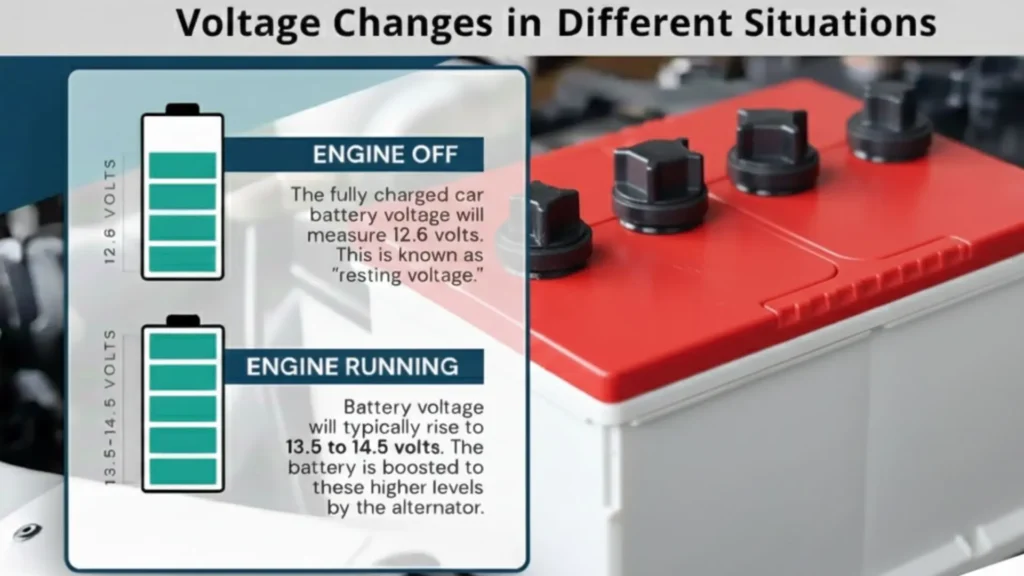
Voltage Changes in Different Situations
Battery voltage moves up and down. Testing conditions matter a lot. Temperature affects readings too. Here’s what happens in different cases.
Resting Voltage Reading
Turn off your car completely. Wait two hours minimum. Now test the battery voltage. This gives the truest reading. A healthy battery shows 12.6 volts or higher.
Running Engine Voltage
Start your engine and check voltage. You should see 13.7 to 14.7 volts. This higher number is normal. The alternator charges the battery while running.
The charging system does several jobs:
- Refills Battery: Replaces used power
- Runs Electronics: Powers radio and lights
- Fights Resistance: Pushes through cables
- Keeps Charge: Maintains battery health
Battery Size and Physical Details
Batteries come in standard sizes. These are called group sizes. Your car needs a specific size. Wrong sizes won’t fit properly.

Common Battery Sizes
Different cars need different batteries. Here are popular sizes:
- Group 24: 10.25 x 6.81 x 8.88 inches
- Group 35: 9.06 x 6.88 x 8.88 inches
- Group 65: 12.06 x 6.81 x 7.5 inches
- Group 48: 10.94 x 6.89 x 7.48 inches
- Group 51: 9.37 x 5.06 x 8.81 inches
Weight Facts
Most car batteries weigh 30 to 50 pounds. Lead plates make them heavy. Bigger batteries weigh more. Higher power batteries use more lead.
Terminal Types
Batteries have different terminal styles:
- Top Posts: Round posts on battery top.
- Side Posts: Threaded holes on sides.
- Dual Posts: Both types available.
- Size Difference: Positive post is bigger.
Cold Cranking Amps Explained
CCA means Cold Cranking Amps. This measures starting power in cold weather. Higher CCA means better cold starts.
CCA tests happen at 0°F. The battery must deliver power for 30 seconds. Voltage can’t drop below 7.2 volts. Cold weather makes starting harder.
Why CCA matters:
- Winter Starting: Cold slows battery power.
- Thick Oil: Engine oil gets thick when cold.
- More Power Needed: Cold engines resist turning.
- Climate Choice: Pick higher CCA for cold areas.
Most batteries range from 400 to 800 CCA. Bigger engines need higher numbers. Diesel trucks need even more power.
Reserve Capacity Rating
Reserve Capacity shows backup power. It measures minutes of runtime. This matters if your alternator fails.
The test uses 25 amps at 80°F. The battery must stay above 10.5 volts. Most batteries last 60 to 150 minutes.
Reserve Capacity helps with:
- Alternator Problems: Keep driving temporarily.
- Accessory Use: Run lights with engine off.
- Emergency Power: Help during breakdowns.
- Deep Use: Handle longer power draws.
Modern Battery Features
New batteries have better designs. They last longer than old types. Many need no maintenance. Here are the main types.
Maintenance-Free Batteries
These batteries are sealed tight. You never add water. They work cleaner and safer.
Benefits include:
- Sealed Design: No spills possible
- Less Water Loss: Calcium grids help
- Gas Recycling: Captures hydrogen inside
- Longer Life: Lasts 3 to 5 years
- Cleaner Use: No acid exposure
AGM Battery Technology
AGM stands for Absorbed Glass Mat. These are premium batteries. They cost more but work better.
AGM advantages:
- Spill Proof: Works any direction
- Fast Charging: Accepts power quickly
- Deep Discharge: Handles tough use
- Long Life: Lasts 5 to 7 years
- Better Performance: Great for start-stop cars
EFB Battery Type
EFB means Enhanced Flooded Battery. These sit between standard and AGM types.
EFB features:
- Better Cycling: Stronger than standard
- Start-Stop Ready: Made for modern cars
- Lower Cost: Cheaper than AGM
- Thicker Plates: More durable design
- Good Life: Usually 4 to 6 years
Testing Your Battery Voltage
Regular testing prevents problems. You need a simple tool called a multimeter. Testing takes just minutes.
How to Test Voltage
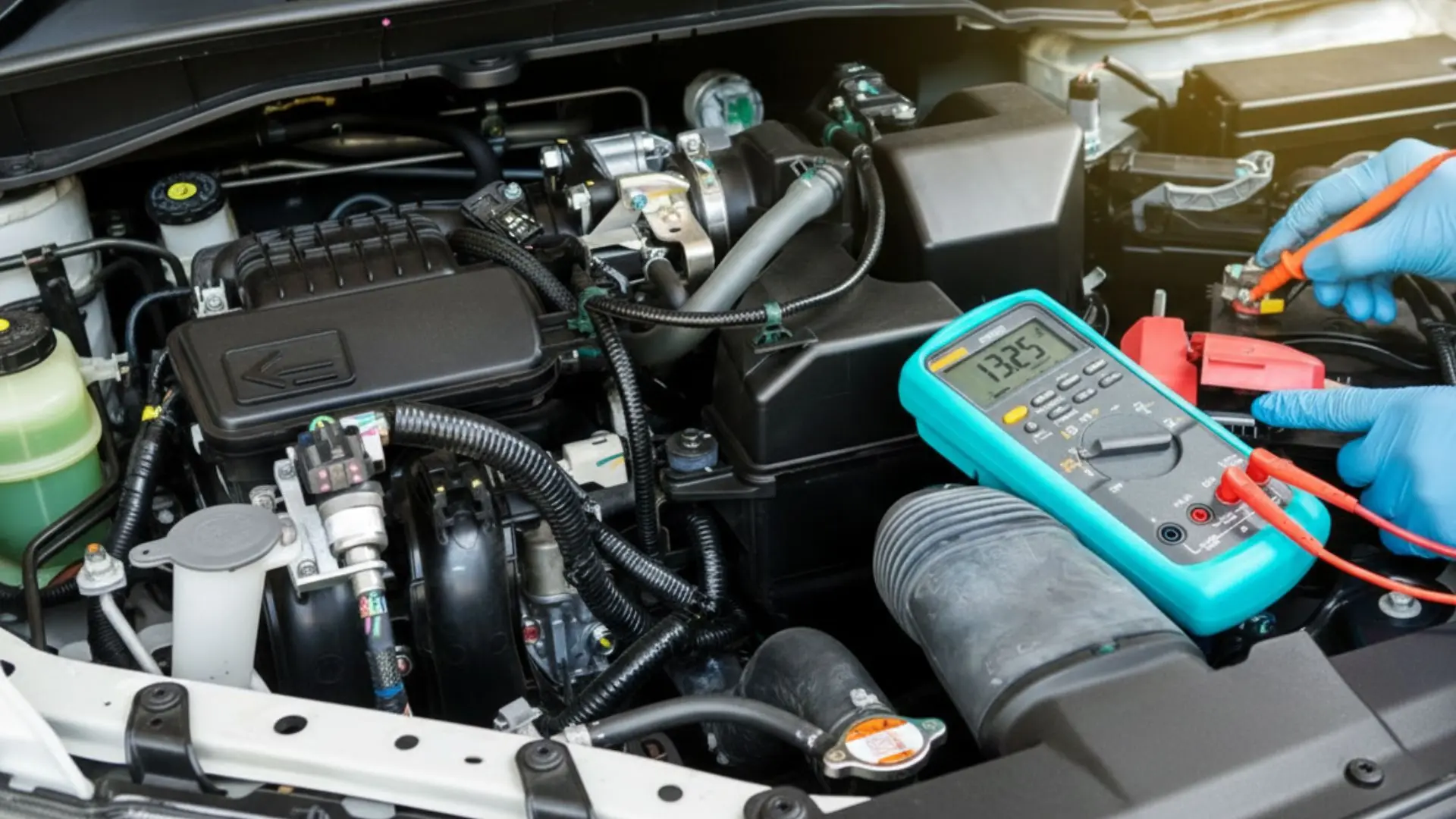
Turn off your engine. Wait two hours for best results. Set multimeter to DC volts. Touch red lead to positive terminal. Touch black lead to negative terminal. Read the number shown.
Load Testing Method
Voltage tests don’t show everything. Load tests are more complete. They apply heavy load while measuring.
Load test details:
- Special Tool: Uses half the CCA rating.
- Pass Mark: Must stay above 9.6 volts.
- Test Time: Runs 10 to 15 seconds.
- Temperature Adjusted: Based on weather.
- Most Reliable: Best health check.
Warning Signs
Watch for these battery problems:
- Slow Cranking: Engine turns slowly.
- Dim Lights: Headlights look weak.
- Electrical Issues: Accessories act strange.
- Warning Light: Dashboard battery light on.
- Clicking Noise: Starter clicks but won’t turn.
- Swollen Case: Battery looks bloated.
Charging System Basics
Your alternator keeps the battery charged. It makes electricity from engine power. The voltage regulator controls charging.
Alternator Job
The alternator produces 13.7 to 14.7 volts. It powers everything while driving. It also recharges the battery.
Alternator parts:
- Output Power: 50 to 200 amps
- Belt Driven: Runs off engine belt
- Three Phase: Makes smooth power
- AC to DC: Converts power type
Voltage Regulator Function
This part controls charging voltage. It prevents overcharging. It also stops undercharging.
Regulator tasks:
- Voltage Limit: Caps maximum voltage
- Temperature Adjust: Changes with heat
- Load Response: Increases when needed
- Battery Protection: Prevents damage
Charging Problems
Wrong charging causes damage. Too much voltage hurts the battery. Too little voltage also causes issues.
Overcharging damage:
- Hot battery temperature.
- Acid boiling and loss.
- Plate damage inside.
- Shorter battery life.
Undercharging damage:
- Sulfate buildup on plates.
- Lower power capacity.
- Hard engine starting.
- Early battery failure.
Comparing Battery Types
Car batteries differ from other batteries. Deep cycle batteries work differently. Lithium batteries are also different.
Lithium Car Batteries
Some new cars use lithium batteries. They’re lighter and smaller. They cost much more money.
Lithium features:
- Light Weight: 60% lighter than lead
- Long Life: Can last 8 to 10 years
- High Cost: Much more expensive
- Temperature Sensitive: Needs special care
Other Voltage Systems
Not all vehicles use 12 volts:
- 6-Volt: Old cars and motorcycles
- 24-Volt: Big trucks and buses
- 48-Volt: New hybrid systems
- High Voltage: Electric car main batteries
Temperature Effects on Batteries
Heat and cold change battery performance. Cold weather is hardest on batteries. Hot weather shortens battery life.
Cold Weather Impact
Batteries lose power when cold. Chemical reactions slow down. Starting takes more energy.
Cold effects:
- Capacity Loss: Loses 20% at freezing
- Slow Reactions: Chemistry slows down
- Hard Starting: Cold oil resists turning
- Lower Readings: Shows less voltage
- Thick Acid: Solution moves slower
Hot Weather Problems
Heat speeds up battery aging. It also increases water loss. Hot climates shorten battery life.
Heat effects:
- Fast Corrosion: Internal damage speeds up
- Self Discharge: Loses charge sitting
- Water Loss: Acid evaporates faster
- Shorter Life: Dies sooner in heat
Battery Maintenance Tips
Good care extends battery life. Simple checks prevent problems. Regular cleaning helps too.
Testing Schedule
Check your battery regularly:
- Monthly: Test resting voltage
- Twice Yearly: Get load tests done
- Visual Check: Look for damage
- Clean Terminals: Remove white buildup
- Test Charging: Check alternator output
Cleaning Terminals
Dirty terminals cause starting problems. Clean them every six months.
Cleaning steps:
- Baking Soda: Mix with water
- Wire Brush: Scrub terminals clean
- Rinse Well: Wash away residue
- Dry Completely: Remove all water
- Apply Protector: Spray or grease terminals
Proper Charging
Charge batteries correctly:
- Right Charger: Match your battery type
- Follow Limits: Don’t exceed voltage specs
- Watch Temperature: Stop if battery gets hot
- Avoid Overcharge: Disconnect when full
- Trickle Charge: Use for stored vehicles
Conclusion
A standard car battery operates at 12.6 to 12.8 volts when fully charged. Testing voltage helps catch problems early. Regular maintenance extends battery life. Clean terminals and check voltage monthly. Load test twice yearly for best results. Replace batteries showing under 12.4 volts at rest. Modern AGM and EFB batteries offer better performance. Understanding voltage keeps your car starting reliably every time.